Bulletin was an online newsletter platform launched by Facebook on July 6, 2021, that allows notable writers to make announcements directly to their subscribers. Its competitors included Substack, of which Bulletin was called a "near-clone." Writers participating in the platform's launch included Malcolm Gladwell, Mitch Albom, Tan France, Jessica Yellin, Jane Wells, Erin Andrews and Dorie Greenspan. Facebook CEO Mark Zuckerberg stated that Bulletin represented the first time that the company had "built a project that is directly for journalists and individual writers." In October 2022 Meta announced the shutdown of Bulletin. The platform went into read only mode in January 2023 and became unavailable in April 2023. == History == Facebook announced Bulletin as its online newsletter platform on June 29, 2021. and launched by the company on July 6, 2021. Facebook CEO Mark Zuckerberg touted the service by saying that Bulletin represented the first time that the company had "built a project that is directly for journalists and individual writers." Writers participating in the platform's launch included Malcolm Gladwell, Mitch Albom, Tan France, Jessica Yellin, Jane Wells, Erin Andrews and Dorie Greenspan. == Reception == Unlike competitor such as Substack, Facebook indicated upon service's launch that it would not take a cut of subscription fees of writers using that platform. According to Washington Post technology writer Will Oremus, the move was criticized by those who viewed it as a form of predatory pricing intended by Facebook to force those competitors out of business. Sandeep Vaheesan, legal director of the think tank Open Markets, called for the government to reexamine predatory pricing as a violation of antitrust law, saying, "We want companies to compete by making better products, investing in new equipment and tech — not purely relying on their financial advantages to capture market share."
AI anthropomorphism
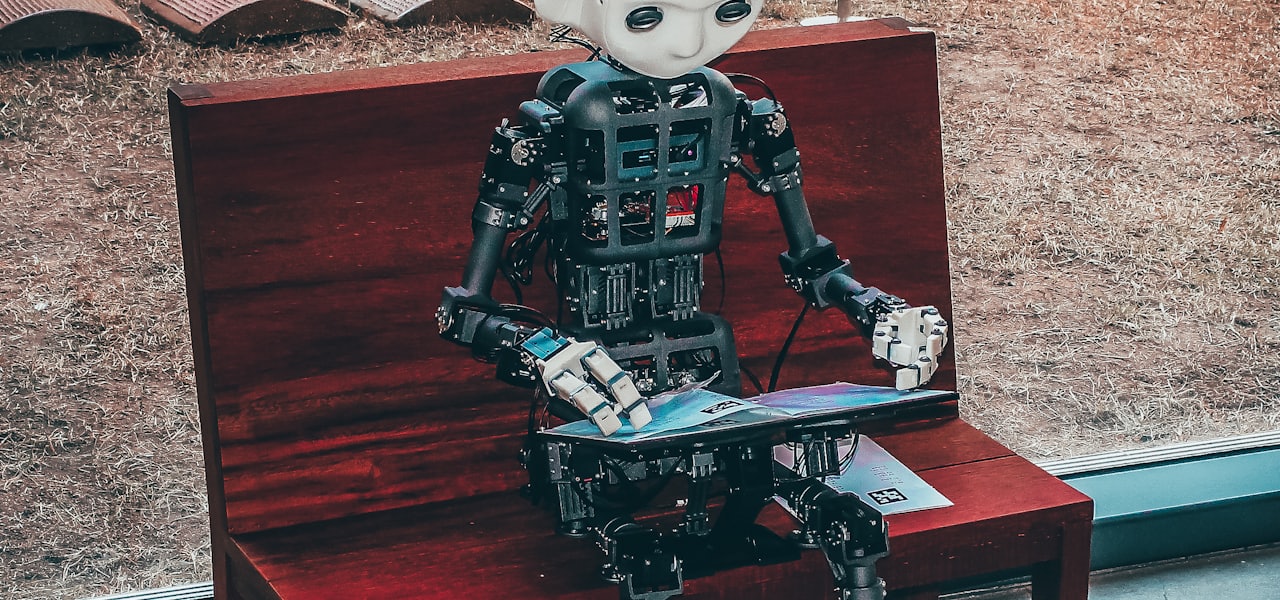
AI anthropomorphism is the attribution of human-like feelings, mental states, and behavioral characteristics to artificial intelligence systems. Factors related to the user of the AI – such as culture, age, education, gender, and personality traits – are also important determinants of the strength of anthropomorphic effects. Since the earliest days of AI development, humans have interpreted machine outputs through anthropomorphic frameworks, but the recent emergence of generative AI has amplified these tendencies. In research and engineering, there is a distinction between anthropomorphism and anthropomorphic design. The former is an innate human tendency toward non-human entities. The latter is the scientific community effort to “design anthropomorphism”. Such a design can involve the manipulation of cues, including AI appearance, behaviour and language. Contemporary AI systems today can generate extremely human-like outputs and are often designed specifically to do so, meaning that their anthropomorphic effects can be especially powerful. In some cases, anthropomorphism is accompanied with explicit beliefs that AI systems are capable of empathy, goodwill, understanding, or consciousness. == Background == === In early AIs === Views of artificial agents possessing a human-like intelligence have existed since the early development of computers in the mid-1900s. The use of the human mind as a metaphor for understanding the workings of machine systems was prevalent among researchers in the early days of computer science, with multiple influential works widely distributing the idea of intelligent machines. Among the most widely cited papers of this period was Alan Turing's "Computing Machinery and Intelligence" in which he introduced the Turing Test, stating that a machine was intelligent if it could produce conversation that was indistinguishable from that of a human. These academic works in the 1940s and 1950s gave early credibility to the idea that machine workings could be thought of similarly to human minds. The public quickly came to view artificial systems similarly, with often exaggerated conceptions of the capabilities of early machines. Among the most well-known demonstrations of this was through the chatbot ELIZA designed by Joseph Weizenbaum in 1966. ELIZA responded to user inputs with a rudimentary text-processing approach that could not be considered anything resembling true understanding of the inputs, yet users, even when operating with full conscious knowledge of ELIZA's limitations, often began to ascribe motivation and understanding to the program's output. Weizenbaum later wrote, "I had not realized ... that extremely short exposures to a relatively simple computer program could induce powerful delusional thinking in quite normal people." Comparisons between the intellectual capabilities of artificial intelligence and human intelligence were continually intensified by the attempts of computer scientists to develop machines that could perform human tasks at a level equal to or better than humans. A symbolic turning point was achieved in 1997, when IBM's chess supercomputer Deep Blue defeated then-world champion Garry Kasparov in a highly publicized six-game match. The defeat of a human by a machine for the first time in chess – a game viewed as a canonical example of human intellect – and the media attention surrounding the match led to a significant shift, where views of parallels between human and artificial intelligence moved from abstract speculation to being concretely demonstrated. A similar achievement was reached in the board game Go in 2017, when the program AlphaGo defeated world top-ranked Ke Jie. === Large language models === The AI boom of the 2020s brought about the widespread emergence of generative AI; in particular, chatbots such as ChatGPT, Gemini, and Claude based on large language models (LLMs) have become increasingly pervasive in everyday society. These systems are notable for the fact that they are able to respond to a wide range of prompts across contexts while producing strikingly human-like outputs – research has shown that humans are often unable to distinguish human-generated text from AI-generated text, and modern AI chatbots have formally been shown to pass the Turing test. As such, the anthropomorphic effects of AI are more powerful than ever. Given that LLMs have brought AI into the technological mainstream, considerable scientific effort has been devoted in recent years to understand existing and potential ramifications of AI in the public sphere; the prevalence and effects of anthropomorphism is one of those domains where much of this effort has been directed. == Current anthropomorphic attributions == === In the general public === Surveys have shown that a substantial portion of the public attributes human-like qualities to AI. In one sample of U.S. adults from 2024, two-thirds of people believed that ChatGPT is possibly conscious on some level, though other research has shown that the public still views the likelihood itself of AI consciousness as comparatively low. Another study conducted in 2025 found that women, people of color, and older individuals were most likely to anthropomorphize AI, as well as that – in general – humans view AIs as warm and competent, and anthropomorphic attributions to AI had increased by 34% in the past year. A YouGov poll reported that 46% of Americans believe that people should display politeness to AI chatbots by saying "please" and "thank you", demonstrating the application of social norms to AI. These beliefs extend to behavior, where majorities of AI users claim to always be polite to chatbots; of those who behave politely, most say they do so simply because it is the "nice" thing to do. In many recent cases, humans have developed robust interpersonal bonds with AI systems. For example: users of social chatbots like Replika and Character.ai have been documented to fall in love with the AIs, or to otherwise treat the AIs as intimate companions, and it has become increasingly common for individuals to use LLMs like ChatGPT as therapists. Chatbots are able to produce responses deeply attuned to users, as they are often designed to maximize agreeableness and mirror users' emotions; this can create compelling illusions of intimacy. === In the research community === In many cases, even AI researchers anthropomorphize AI systems in some capacity. Among the most extreme and well-publicized of these instances occurred in 2022, when engineer Blake Lemoine publicly claimed that Google's LLM LaMDA was conscious. Lemoine published the transcript of a conversation he had had with LaMDA regarding self identity and morality which he claimed was evidence of its sentience; he asserted that LaMDA was "a person" as defined by the United States Constitution and compared its mental capability to that of a 7- or 8-year-old. Lemoine's claims were widely dismissed by the scientific community and by Google itself, which described Lemoine's conclusions as "wholly unfounded" and fired him on the grounds that he had violated policies "to safeguard product information". It is much more common that AI researchers unintentionally imply humanness of AI through the ordinary use of anthropomorphic language to describe nonhuman agents. This kind of language, which Daniel Dennett coined the "intentional stance", is very common in everyday life in a variety of different contexts (e.g., "My computer doesn't want to turn on today"). For AI agents that may actually appear to very closely replicate some human abilities, however, the casual use of such anthropomorphic language in research has been scrutinized for being potentially misleading to the public. As early as 1976, Drew McDermott criticized the research community for the use of "wishful mnemonics", where AIs were referred to with terms like "understand" and "learn". In the LLM era, these criticisms have further intensified, with the negative effects of AI anthropomorphism in the public posing an especially salient danger given the elevated accessibility of modern AI. In some cases, the use of anthropomorphic language for AI is not unintentional, but is willfully used by researchers in order to promote better understanding of the brain – the idea being that, as AI can be functionally similar in some ways to the human brain, we may gain new insights and ideas from treating AI as a kind of model of the brain's workings. In particular, deep neuronal networks (DNNs) are often explicitly compared to the human brain, and significant advances in DNN research have stirred considerable enthusiasm about the ability of AI to emulate the human abilities. Caution has been urged in this domain as well, however; the use of anthropomorphic language can mask important differences that fundamentally distinguish AI from human intelligence. When it comes to DNNs, for example, it has been pointed out that they are still structurally quite different
Best AI Chatbots in 2026
Curious about the best AI chatbot? An AI chatbot is software that uses machine learning to help you get more done — it combines speed, accuracy, and an interface that just works. Hands-on testing shows real-world results vary, so a short free trial is the smartest way to decide. Whether you are a beginner or a pro, the right AI chatbot slots into your workflow and pays for itself fast. This guide breaks down the top picks, their pros and cons, and who each one is best for.
Top 10 AI Presentation Makers Compared (2026)
Trying to pick the best AI presentation maker? An AI presentation maker is software that uses machine learning to help you get more done — it scales effortlessly from a single task to thousands. The best picks balance beginner-friendly simplicity with the depth power users need, and they ship updates often. Whether you are a beginner or a pro, the right AI presentation maker slots into your workflow and pays for itself fast. Read on for hands-on impressions, pricing tiers, and the standout features that matter.
Is an AI Video Editor Worth It in 2026?
Shopping for the best AI video editor? An AI video editor is software that uses machine learning to help you get more done — it keeps getting smarter as the underlying models improve. Pricing, accuracy, and the size of the model behind the tool are the three factors that most affect daily usefulness. Whether you are a beginner or a pro, the right AI video editor slots into your workflow and pays for itself fast. We tested the leading options and ranked them by quality, value, and ease of use.
Human-centered AI
Human-centered AI is the initiative at the intersection of the fields of artificial intelligence (AI) and human-computer interaction (HCI) to develop AI systems in a way that prioritizes human values, needs, and general flourishing. Emphasis is placed on the recognition that artificial intelligence systems are rapidly changing, and will continue to influence, many aspects of the human experience, in areas ranging from scientific inquiry, governance and policy, labor and the economy, and creative expression, with an aim set to adapt current developments and guide future developments on a trajectory which is most beneficial to the human population at large, with the goal of augmenting human intelligence and capacities across these areas, as opposed to replacing them. Particular attention is paid to mitigating negative effects of AI automation on the livelihoods of the labor force, the use of AI in healthcare fields, and imbuing AI systems with societal values. Human-centered AI is linked to related endeavors in AI alignment and AI safety, but while these fields primarily focus on mitigating risks posed by AI that is unaligned to human values and/or uncontrollable AI self-development, human-centered AI places significant focus in exploring how AI systems can augment human capacities and serve as collaborators. == Conceptual history == The importance of the alignment of artificial intelligence development towards human values in some sense predates artificial intelligence itself, as before the modern conception of artificial intelligence as coined at the 1956 Dartmouth Workshop, the conception of robots as constructed, autonomous agents entered the cultural consciousness as early as the 1920s, with Karel Capek's Rossum's Universal Robots. The imagined issues relating to robots' aims and values requiring intentional alignment and direction with those of humans followed soon after, most widely known from science fiction author Isaac Asimov’s Three Laws of Robotics, dating to his 1942 short story “Runaround”. Two of the three eponymous laws are directly concerned with robots’ interaction with and positioned deference towards humans, and have in recent times been reexamined in the face of modern AI. In 1985, after artificial intelligence research had taken off and its effects were more acutely conceptualized, Asimov added a Rule Zero, treating robots' relationship with humanity as a whole, distinct from individual humans. While modern artificial intelligence is largely distinct from robotics, the conceptualization of both robots and AI systems as autonomous agents positions this as a foundation for conceptions of human-centered AI. Aside from robots, artificially intelligent autonomous agents in interaction with humans have been conceived of for at least 75 years. In 1950, Alan Turing published his famous "Imitation Game", often also called the Turing Test, a thought experiment that uses human-machine interaction as an assessor for the intelligence of a system. In recent times, artificial intelligence researchers such as Stanford's Erik Brynjolfsson have conceived of rapid AI development leading to a so-called "Turing Trap". == Augmentation and automation == A major stated aim of human-centered AI is to promote the development of AI in ways that augment human capabilities, rather than replacing them. To this end, organizations and initiatives that take a human-centered approach to AI development focus on frameworks that encourage collaboration between humans and artificial intelligence systems to build towards even greater progress, rather than attempting to automate tasks currently handled by humans. Such avenues include everything from data visualization for big data, allowing human engineers to better understand extremely large datasets, allowing for the design of better machine learning models to handle them, to AI-powered sensors to monitor vitals, allowing for better responsiveness from healthcare providers. Many human-centered AI initiatives often position it as a better alternative to the apparent mainstream in AI development, which is primarily concerned with automation. Driven by the pressures of the market economy, AI development that does replace tasks currently performed by humans with automated processes is incentivized, as it allows for greater profit margins; this often comes at the detriment of the human whose performance is replaced, thus leading to an environment wherein human workers are outcompeted by AI systems across various service-sector and technology-based industries. At the same time, automation and augmentation are not always incompatible; a major aim of human-centered AI is towards the automation of rote tasks that would otherwise hinder a human’s productivity or creativity, freeing them to direct their energy and intelligence towards higher-level tasks, thus achieving augmentation through automation. Empirical research in pharmaceutical sales has shown that a human-centered implementation - where work procedures, training, and incentives are designed around individuals' cognitive needs - improves augmentation performance, while implementation without such adaptation can worsen outcomes relative to a legacy system. == Research == Much of the work done on human-centered AI comes from research institutes, within universities, companies, and as freestanding organizations. The Stanford Institute for Human-Centered AI (abbreviated to HAI) is one such group, engaging academics, industry professionals, and policymakers centered in Stanford University to conduct research and inform policy in various areas in human-centered AI, including on aspects of the intelligence itself, augmentation, and on measuring the impacts of AI systems on sociopolitcal and cultural institutions. Similar groups exist at other universities, including the Chicago Human + AI (CHAI) Lab at the University of Chicago, the HCAI@GU group at the University of Gothenburg, and the Human-Centered AI (HAI) Lab at the University of Oxford. Outside of the academy, companies such as IBM have research initiatives dedicated to advancements in human-centered AI. At Kenyon College, the Integrated Program for Humane Studies (IPHS) launched a human-centered AI program in 2016 integrating artificial intelligence research with humanities and social science inquiry. This approach treats computation and humanistic scholarship as a single unified field of research rather than as separate disciplines requiring collaboration. The program's researchers have published in both AI venues (such as the International Conference on Machine Learning and Frontiers of Computer Science) and humanities journals (such as PMLA and Poetics Today), and the lab was selected in December 2025 by Schmidt Sciences for its Humanities and AI Virtual Institute to apply AI methods to cultural heritage preservation.
Babel Fish (website)
Yahoo! Babel Fish was a free Web-based machine translation service by Yahoo!. In May 2012 it was replaced by Bing Translator (now Microsoft Translator), to which queries were redirected. Although Yahoo! has transitioned its Babel Fish translation services to Bing Translator, it did not sell its translation application to Microsoft outright. As the oldest free online language translator, the service translated text or Web pages in 36 pairs between 13 languages, including English, Simplified Chinese, Traditional Chinese, Dutch, French, German, Greek, Italian, Japanese, Korean, Portuguese, Russian, and Spanish. The internet service derived its name from the Babel fish, a fictional species in Douglas Adams's book and radio series The Hitchhiker's Guide to the Galaxy that could instantly translate languages. In turn, the name of the fictional creature refers to the biblical account of the confusion of languages that arose in the city of Babel. == History == On December 9, 1997, Digital Equipment Corporation (DEC) and SYSTRAN S.A. launched AltaVista Translation Service at babelfish.altavista.com, which was developed by a team of researchers at DEC. In February 2003, AltaVista was bought by Overture Services, Inc. In July 2003, Overture, in turn, was taken over by Yahoo!. The web address for Babel Fish remained at babelfish.altavista.com until May 9, 2008, when the address changed to babelfish.yahoo.com. In 2012, the Web address changed again, this time redirecting babelfish.yahoo.com to www.microsofttranslator.com when Microsoft's Bing Translator replaced Yahoo Babel Fish. As of June 2013, babelfish.yahoo.com no longer redirects to the Microsoft Bing Translator. Instead, it refers directly back to the main Yahoo.com page.